A tree on a roof is one of the few tree jobs where the order of steps really matters. Cut in the wrong place and the load shifts into the house. Clean up before taking photos and a claim gets harder. This is the order we recommend for St. Pete homeowners, hour by hour. For anything else about tree removal in St. Pete, see our homepage.
Tree on a House in St. Pete: The First Hour
Get people out and away
Move everyone out of the rooms under or next to the tree, and out of the house if you smell gas, see sparks or hear the structure creaking. Children and pets stay inside, away from the side of the house where it landed. A tree that has landed can still move, especially if a limb is wedged on the roof edge or the root plate is half out of the ground. If anyone is hurt or trapped, call 911 first.
Check for power lines
Look before you walk. If a line is down, sagging, or tangled in the tree, assume it is live and stay well back. Report it to Duke Energy as a downed line or outage. Lines and trees together are the most dangerous mix in a storm. Milton showed how this plays out: limbs on lines knocked out power across the city, and about 141,000 St. Pete Duke customers were still without power the evening after landfall.
If the tree sits on or near the wire feeding your house from the pole, ask Duke to shut that drop off; Duke does this without charge ahead of private tree work. Duke says pruning near power lines should only be done by qualified professionals. Never let anyone, including a tree crew, cut a tree that is touching an energized line.
Shut off what you safely can
If water is coming through a broken pipe or roof opening and you can reach the main shutoff without going under the damaged area, close it. If there is any chance of electrical damage inside, leave the breaker panel to an electrician unless you can reach it safely and dry.
Hours 1 to 4: Photographs Before Anything Moves
Before any limb is cut, document the scene. Once the tree is off the roof, the evidence is gone.
- Wide shots of the house from the street and from each side, showing where the tree sits.
- Close-ups of the roof, gutters, fascia, windows, fence and any cars it hit.
- The base of the tree and its root plate, or the break point on the trunk.
- Inside: ceiling stains, cracks, water on the floor, broken glass.
- A short video walking around the outside.
- If the tree came from a neighbor's yard, include the property line and the tree's condition at the break.
Save everything off your phone as soon as you can. If the tree was dead or rotten before it fell, those photos may matter later. Our piece on liability when a neighbor's tree comes down explains why.
Hours 2 to 8: Call Your Insurer and Get a Crew Scheduled
Report the claim early. Florida law requires an insurer to acknowledge a claim within 7 calendar days and, in most cases, to pay or deny within 60 days of notice. You have one year from the date of loss to report a new claim, but there is no reason to wait.
Ask your insurer three questions while you have them on the phone:
- Is removing the tree from the house covered as part of the dwelling claim? Usually it is, but policy wording controls.
- What is the limit for tree debris that fell in the yard but not on the house? Many policies cap it around $500 to $1,000.
- Do they want to send an adjuster before the tree is moved, or can emergency removal go ahead to prevent more damage?
Write down who you spoke with, when, and what they told you about moving the tree and covering the roof.
Emergency Tree Removal From a House in St. Pete
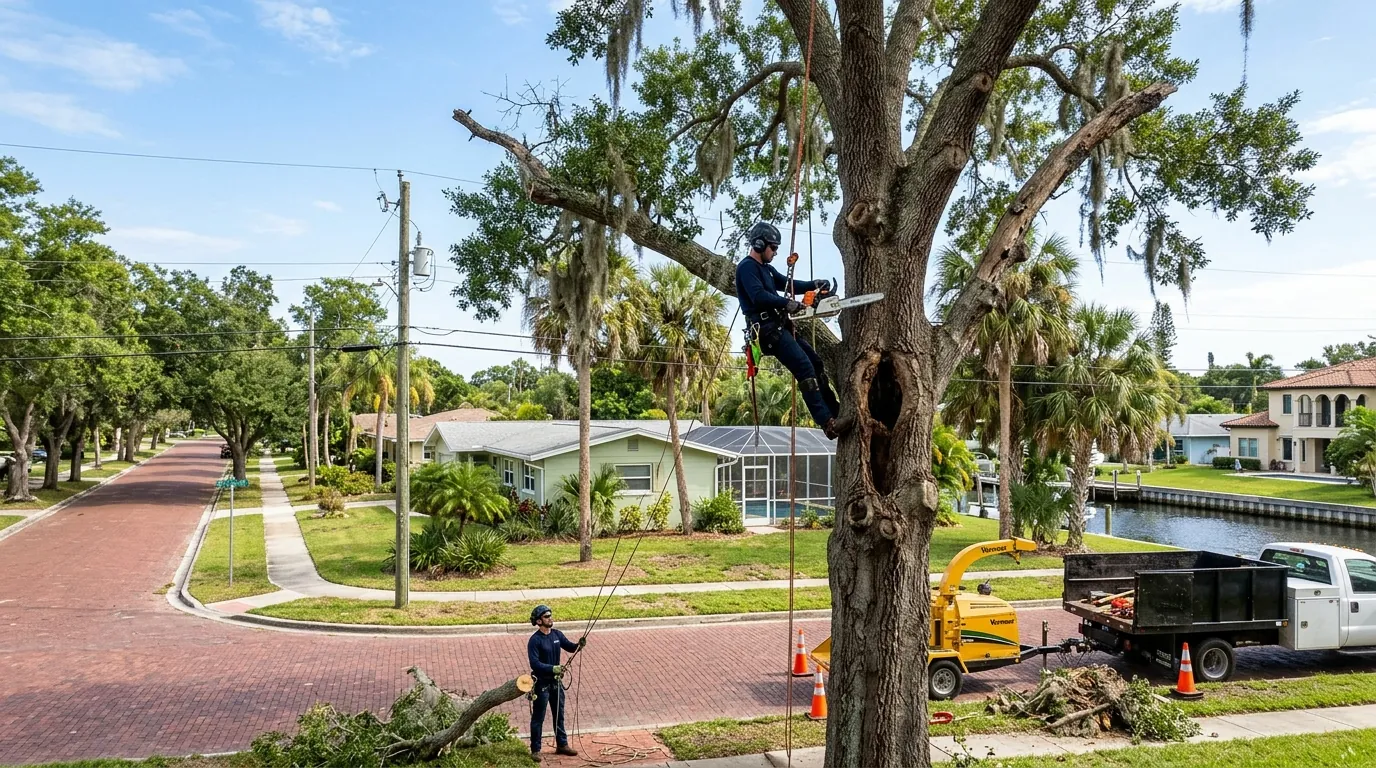
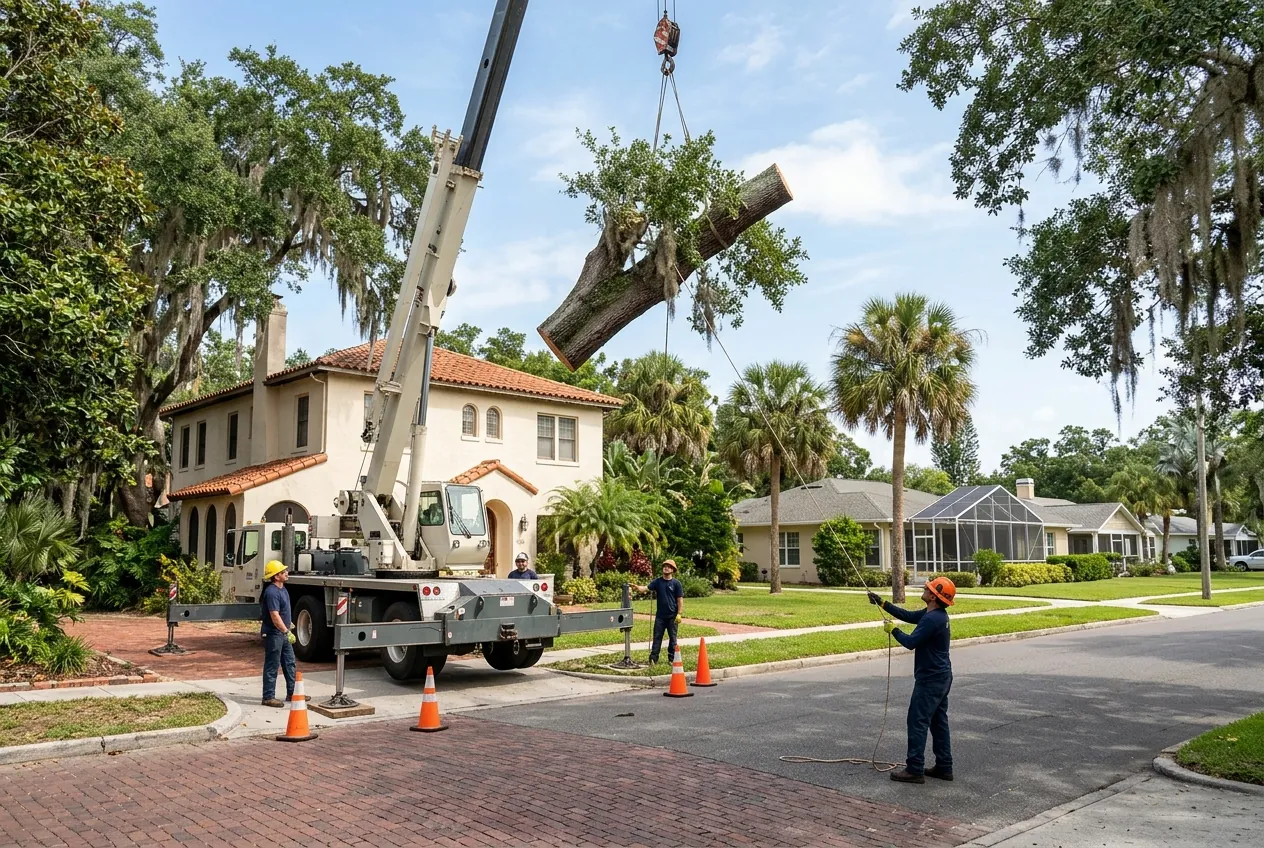
Taking a tree off a roof is not a felling job. The crew has to remove weight from the top down, in the right order, so the trunk does not roll or drop into the house. Depending on size and access, that means one of three methods:
| Method | When it is used | What it involves |
|---|---|---|
| Climber and rigging | Smaller trees, good tie-in points | Limbs are cut and lowered on ropes, then the trunk is cut back in sections |
| Crane-assisted removal | Heavy trunks, big oaks, no safe climb | Sections are cut and lifted straight up and away from the roof |
| Ground work after the lift | Every job | Wood is cut up, chipped and hauled; the yard is raked |
A crane is often the safest way to clear a big laurel oak or pine from a roof, because it lifts sections up instead of letting them drop. Our crane tree removal page explains how we set up on driveways and narrow lots, and emergency tree removal covers how storm calls are handled. We take storm and emergency calls, and a tree resting on a house is the kind of call that goes to the front of the line.
What Emergency Tree Removal Costs in St. Petersburg, FL
These are typical St. Pete-area ranges. Any tree over a structure starts in our top band, and emergency timing adds a premium.
| Item | Typical range | What moves the price |
|---|---|---|
| Tree over or on a structure | $3,000 to $5,500 | Size, species and how much is resting on the roof |
| Crane add-on | +$700 to $2,500 | Crane size, setup space and time on site |
| Emergency or after-hours premium | +25% to 50% | Night, weekend or active storm conditions |
| Storm cleanup on the ground | $150 to $250 per crew-hour | Volume of limbs and logs, haul distance |
| Stump grinding (later) | $125 to $400 first stump | Can wait until the roof is fixed |
So a large oak on a roof, removed after hours with a crane, could reasonably run about $4,600 to $12,000 once the premium is applied, while a smaller tree removed by rigging during normal hours may stay near the bottom of the band. For perspective, a USF survey found Tampa residents spent more than $3,000 on average on cleanup and repairs after the 2024 storms. More detail is in our St. Pete tree removal cost guide.
Permits After a Tree Falls on a St. Pete House
A tree that has already fallen is a cleanup, not a removal of a standing protected tree. Questions come up when part of the tree is still standing, or when a second tree next to it is now split or leaning. Inside city limits, protected trees normally need a permit. After a declared hurricane, St. Pete's code lets the city waive its tree requirements to restore order, but that is decided for each emergency, so we check what is in effect. On a single-family detached home, state law also lets a credentialed professional, an ISA arborist or a licensed landscape architect, document an unacceptable-risk tree so that no permit, fee or replanting can be required. The permit guide has the details.
What Not to Do After a Tree Hits Your House
- Do not climb onto the roof or into the tree.
- Do not cut limbs that are holding weight; the tree can shift into the house.
- Do not move debris before photos are taken.
- Do not let anyone near a line until Duke has made it safe.
- Do not sign over insurance benefits or pay in full up front to someone knocking on doors after a storm. Get a written price first.
Lowering the Risk Before the Next Storm
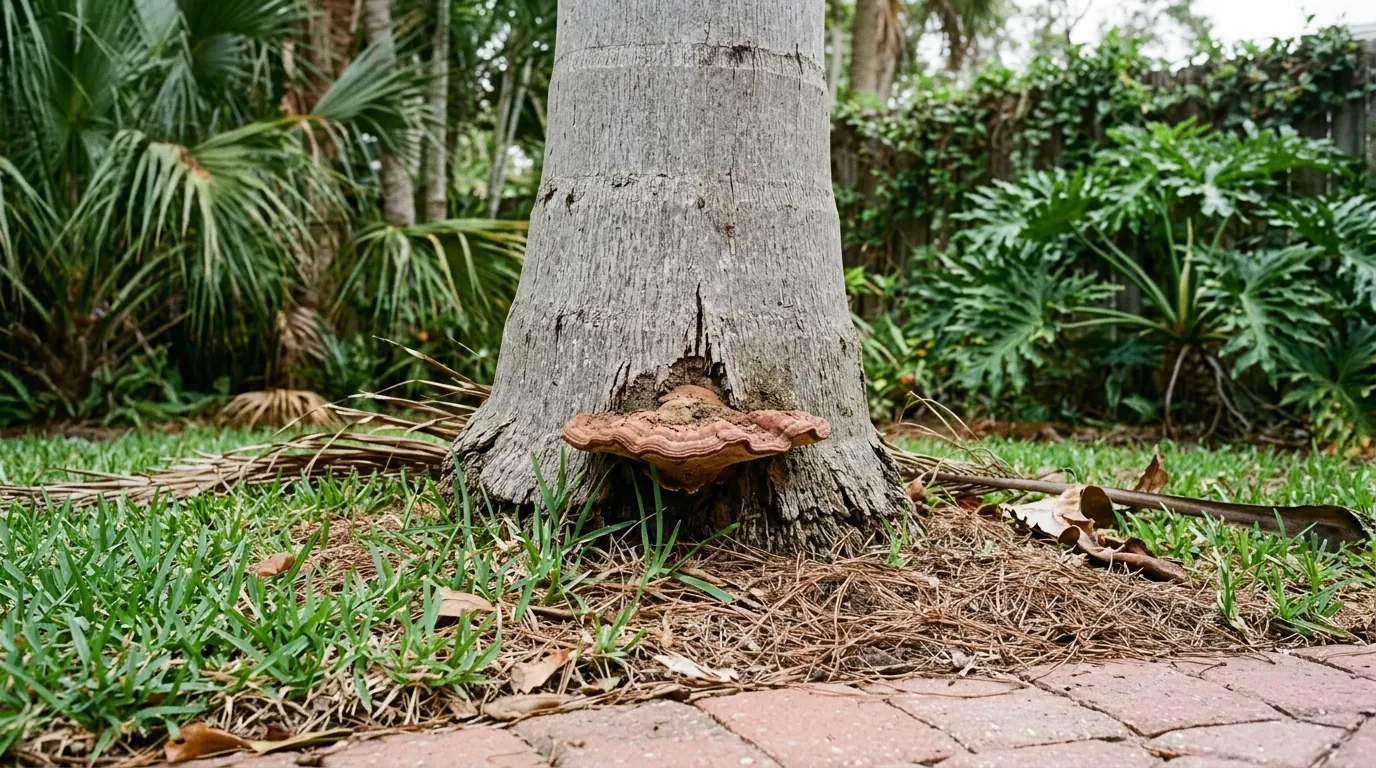
Most trees that land on houses gave some warning first: a lean, a cavity, dead limbs over the roof. With the season running from the first of June through the end of November, winter and spring are the time to look up. Our hazardous tree removal page lists what we check, and our guide to trees damaged by Helene and Milton covers trees still declining from 2024. If a tree is already on your house, or you are worried one is about to be, contact us and tell us what you are seeing.