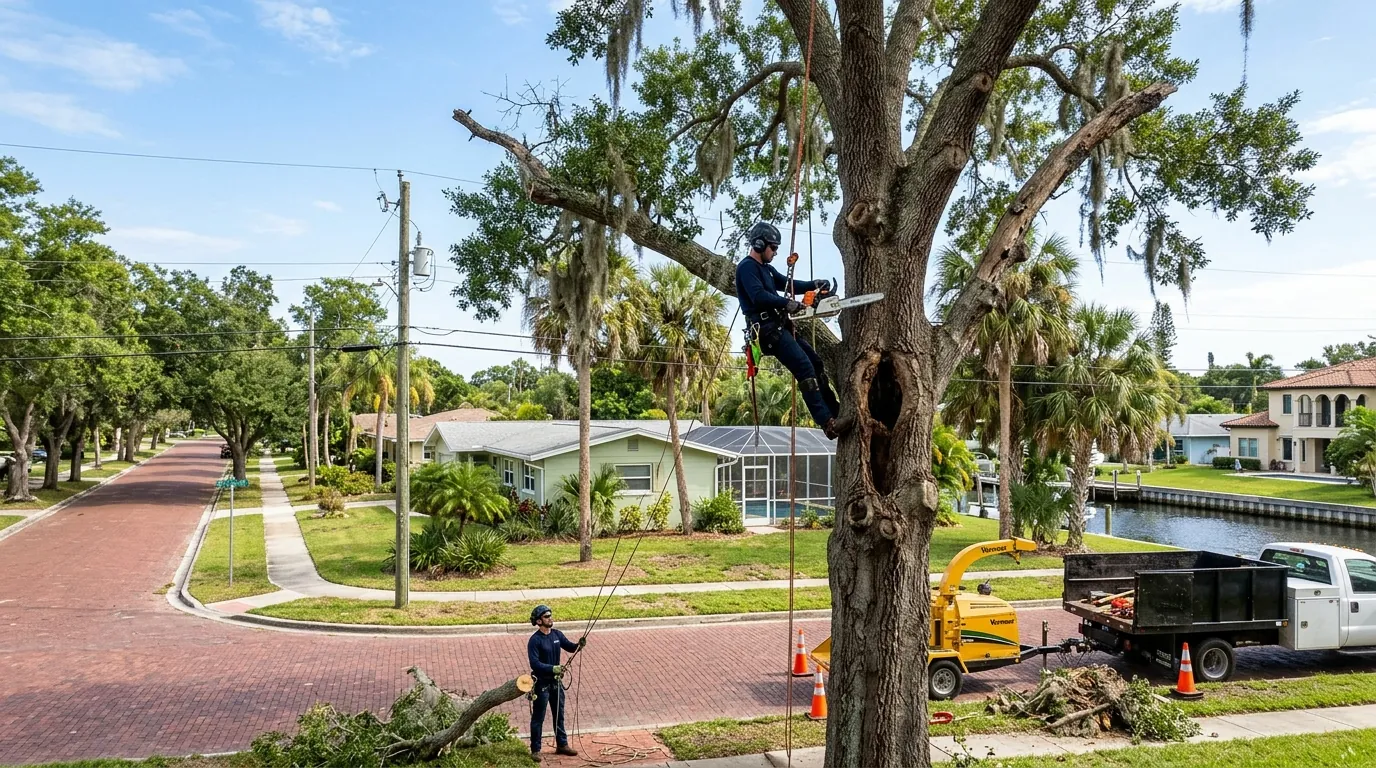
This question comes up after every storm in St. Pete, usually over a fence. The short version comes from the way Florida courts and insurers have handled it for years, summed up in a WUSF report from May 2025 and in UF/IFAS guidance on trees and property lines. Here is how it plays out, what you can do now, and where St. Pete's own tree rules affect your options. For removal or pricing on St. Pete tree removal generally, start on our homepage.
Who Pays for Neighbor Tree Damage in St. Petersburg, FL
| Situation | Who usually pays first | Notes |
|---|---|---|
| A healthy tree falls in a storm and hits your house | Your homeowners insurance, minus your deductible | Treated as an act of nature; the neighbor generally is not at fault |
| A visibly dead or dying tree falls after you warned the owner | Your insurance, which may then seek repayment from the neighbor | The neighbor may be liable for negligence; this recovery is called subrogation |
| Your own tree falls on your neighbor's house | Their homeowners insurance | Same logic in reverse; you may be pursued if your tree was obviously hazardous |
| A tree falls in your yard and hits nothing | Usually you; policies often cap yard debris cleanup | Limits of $500 to $1,000 are common |
| A tree falls on a power line | Call Duke Energy first | Never cut near the line yourself |
A proposed state law known as the Fallen Tree Act would have changed parts of this picture, but it did not pass, so the general rule still stands.
When a Neighbor Can Be Liable for a Fallen Tree in Florida
The exception turns on notice. WUSF's 2025 report put it this way: an owner may be liable if a dying branch posed an imminent danger. In practice that means the tree's condition was obvious, or the owner had been told about it, and they did nothing. UF/IFAS notes there is no Florida case law squarely deciding how live and dead trees differ in these disputes, so outcomes depend on the facts.
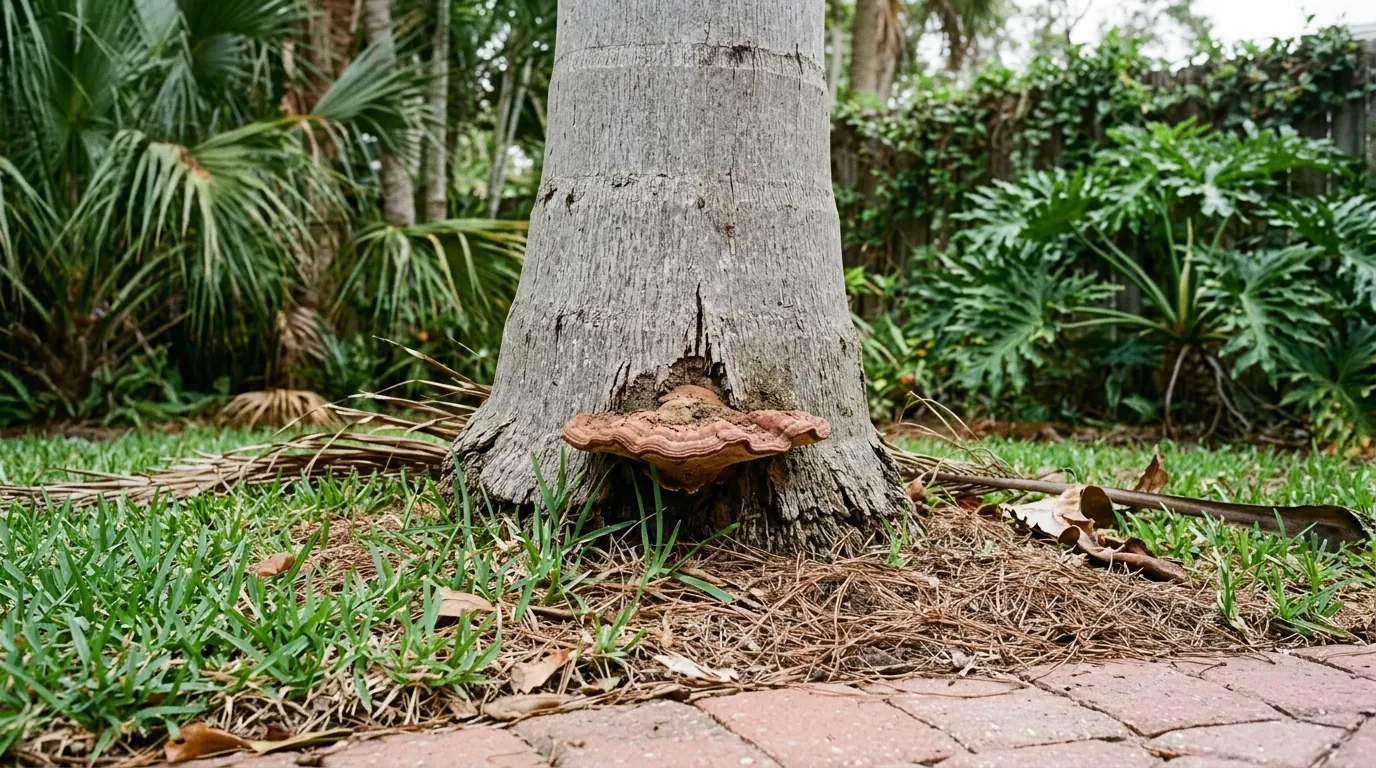
Signs that tend to make a hazard obvious include a tree that is clearly dead, large dead limbs over the property line, a trunk cavity or fungus at the base, or a tree already leaning onto your side. Our page on dead tree removal describes what a crew looks for.
How to Put a Neighbor's Hazardous Tree in Writing
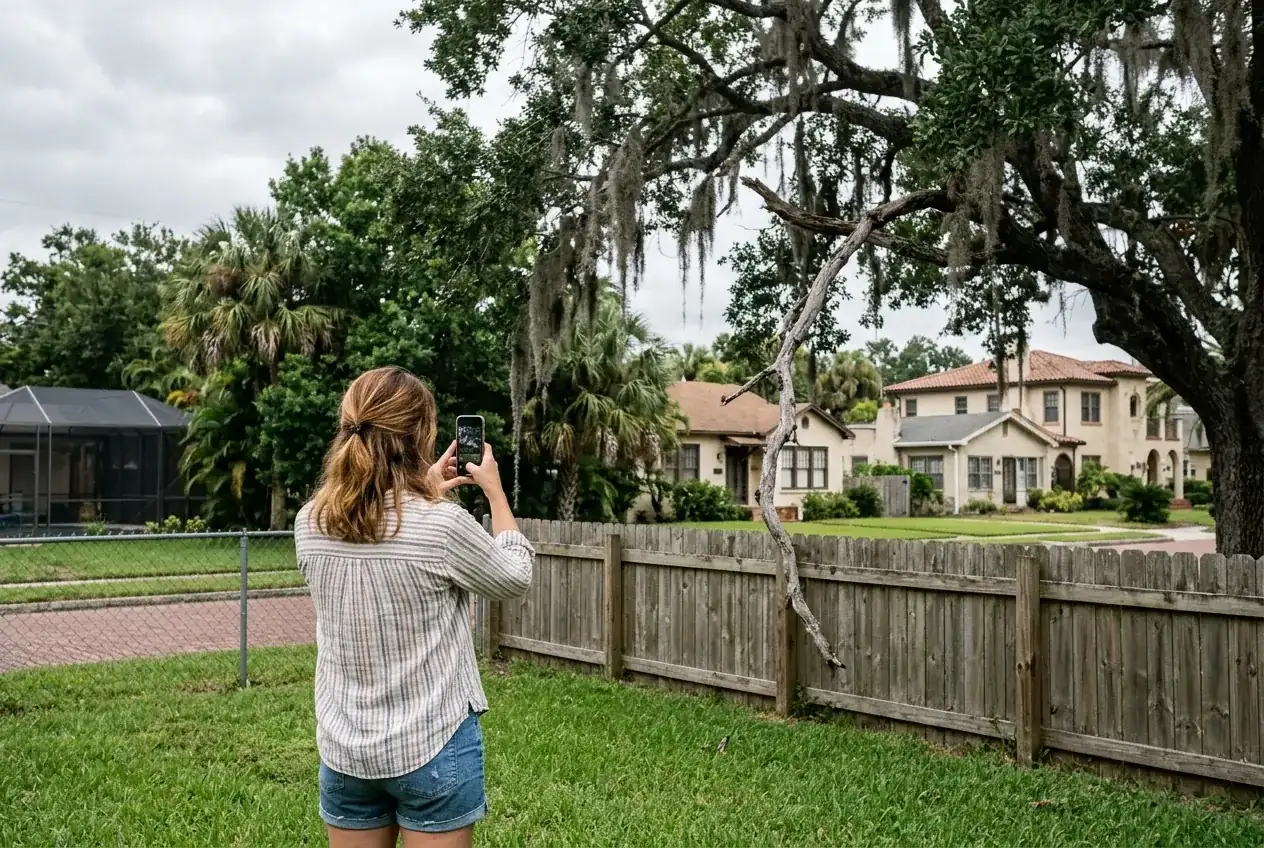
- Take dated photos of the tree from your side, including the trunk, any dead limbs and what they hang over.
- Write a short, polite letter or email describing what you see and asking the owner to have it checked. Keep a copy.
- If the house next door is a rental, send the same note to the owner or property manager, not only the tenant.
- If the tree overhangs a street, sidewalk or alley, note that St. Pete requires owners to keep trees in the abutting right-of-way safe, and the city can be told about hazards there.
- Keep everything together. If the tree fails later, your insurer will want it.
A written estimate from a tree company describing the tree's condition can also help. When our crew looks at a tree, we photograph it and put what we see in writing, which gives you a dated record either way.
Trimming a Neighbor's Branches in St. Pete
The rule UF/IFAS describes is simple self-help: whatever grows over or under the line into your yard, you can cut back to that line, and you pay for it. The tree still belongs to the owner, and UF/IFAS warns that cutting a neighbor's tree down without consent can make you liable for damages.
Inside St. Pete city limits, the city's tree code adds two limits that apply even when you are trimming at the line:
- No more than one-quarter of a tree's canopy may be removed in a year unless the wood is dead.
- On a Grand tree (30 inches DBH and up, any protected species but laurel oak), removing a limb that is 8 inches thick or more at the collar requires a city permit.
So a big live oak hanging over your roof may need a permit before you can take the heavy limbs back, even on your side of the fence. The St. Petersburg permit guide has the details.
Filing an Insurance Claim After a Neighbor's Tree Falls
Florida law sets some deadlines and timelines that are worth knowing:
| Step | Florida rule |
|---|---|
| Give notice of a new or reopened claim | Within 1 year after the date of loss (FS 627.70132) |
| Give notice of a supplemental claim | Within 18 months after the date of loss |
| Insurer acknowledges your claim | Within 7 calendar days of receiving it (FS 627.70131) |
| Insurer pays or denies | Within 60 days after notice, in most cases |
For hurricanes and other weather events, the date of loss is the landfall date or the date the event is verified. Getting a fallen tree off your roof normally falls under dwelling coverage; the debris-only limit is a separate, usually smaller number. Your policy wording controls, so read it or ask your agent. If the tree is still on the roof, our tree-on-the-roof checklist covers the order of steps.
What a Tree Crew Should Put in Writing After a Neighbor's Tree Falls
When a neighbor's tree comes down on your side, the estimate does double duty as a record. On these jobs we photograph the tree before cutting and note the details an adjuster or the other owner may ask about:
- The species and its rough height and trunk diameter.
- Where it failed: roots, trunk or a limb, and which side of the line it stood on.
- Any decay, hollow wood or old dead limbs visible at the break.
- What it hit: roof, fence, lanai, car or yard only.
- A price that separates removal off the structure from yard debris and stump grinding.
That split matters because insurers often treat the roof part and the yard part under different limits. If the tree is still on the house, call for emergency tree removal first and sort out the paperwork after.
Common St. Pete Neighbor Tree Situations
A tree hanging over the alley or sidewalk
St. Pete puts trees in the right-of-way next to a property on that property's owner. Owners must keep trees and vegetation there safe and keep 8 ft of clearance over sidewalks and 14 ft over streets and alleys. If a neighbor's tree hangs low over a shared alley, that rule gives you something concrete to point to. The code also makes owners deal with dead or diseased trees that could land in the public way or on a neighbor.
A tree right on the property line
When the trunk straddles the line, both owners usually have a stake in it, and neither should remove it alone. Agree in writing on who pays for what before any work starts, and if the tree is protected, apply for the permit together.
Storm debris from someone else's tree
After Helene and Milton, the city ran a citywide storm debris pickup, hauling more than 2 million cubic yards by January 2025. That was a disaster program, not a standing service, so do not count on the city to haul a neighbor's tree after a routine storm. If debris lands in your yard, your policy's debris limit and your neighbor's cooperation are what you have to work with. Our storm damage cleanup crew prices that work by crew time.
Preventing Neighbor Tree Disputes Before Hurricane Season
Storm season here is June 1 through November 30. The easiest dispute to settle is the one that never happens:
- Walk the property line in winter or spring and look up.
- Talk to the neighbor before writing to them; a tree that threatens both houses is easier to solve together.
- Get one written estimate both owners can see.
- If a shared tree is protected, apply for the permit early, since inspections take time.
If a tree on either side of the line worries you, book a free estimate. We will tell you what we see, check the permit rules, and price hazardous tree removal or pruning in writing. For questions about who owes what, talk to your insurer or an attorney.